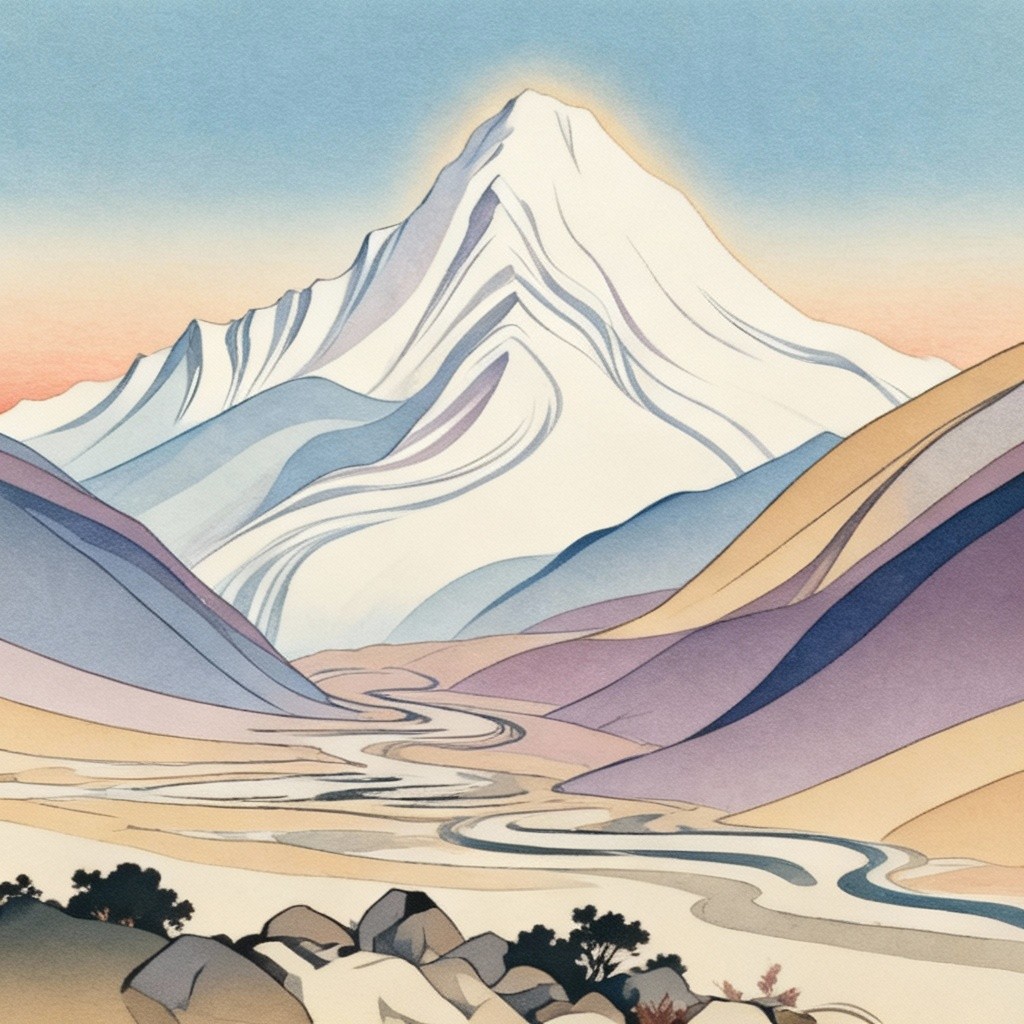
Ketu: the Night Dream of Karakoram
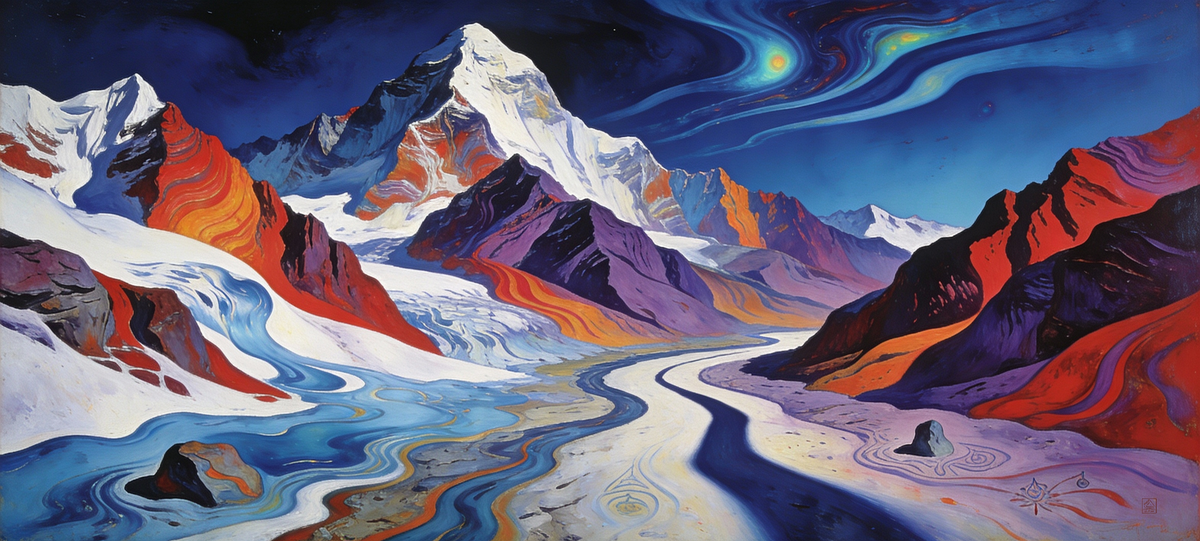
Над высокой тишиной Каракорума Кету восходит, словно ясный сон, сотканный из льда и огня; его белые склоны ловят последнюю память дневного света, пока ледники внизу тают в реки жидкого сапфира и фиолета.
Вокруг него меньшие вершины пылают прожилками багрянца, янтаря и аметиста, будто скрытые пласты самой горы вывернуты наружу, открывая тайную геологию космического сердца.
Чогори — Гора гор на языке балти — стоит безмолвным исполином под глубокой индиговой высью, а звёздные следы и полярные переливы дрейфуют, словно разумная каллиграфия, медленно изгибаясь над долиной в настороженных дугах.
Река света уходит в невидимое, зовя странника не к одной лишь вершине, но к внутреннему восхождению, где Кету становится и осью мира, и порогом к более обширной, сокрытой тишине.
Over the high silence of the Karakoram, Ketu rises like a lucid dream wrought of ice and fire, its white flanks catching the last memory of daylight as the glaciers below dissolve into rivers of liquid sapphire and violet. Around it, the lesser peaks burn in striations of crimson, amber, and amethyst, as if the mountain’s own buried strata had been drawn outward into the open air, revealing the secret geology of a cosmic heart.
Chogori, the Mountain of Mountains in the Balti tongue, stands as a silent giant beneath a deep indigo sky, while star‑trails and auroral swirls drift like sentient calligraphy, bending over the valley in slow, watchful arcs. The river of light snakes away into the unseen, inviting the pilgrim not toward a mere summit but into an interior ascent, where Ketu becomes both world‑axis and threshold to a vaster, hidden stillness.