Кирпич шуньяты.

Кирпич шуньяты.
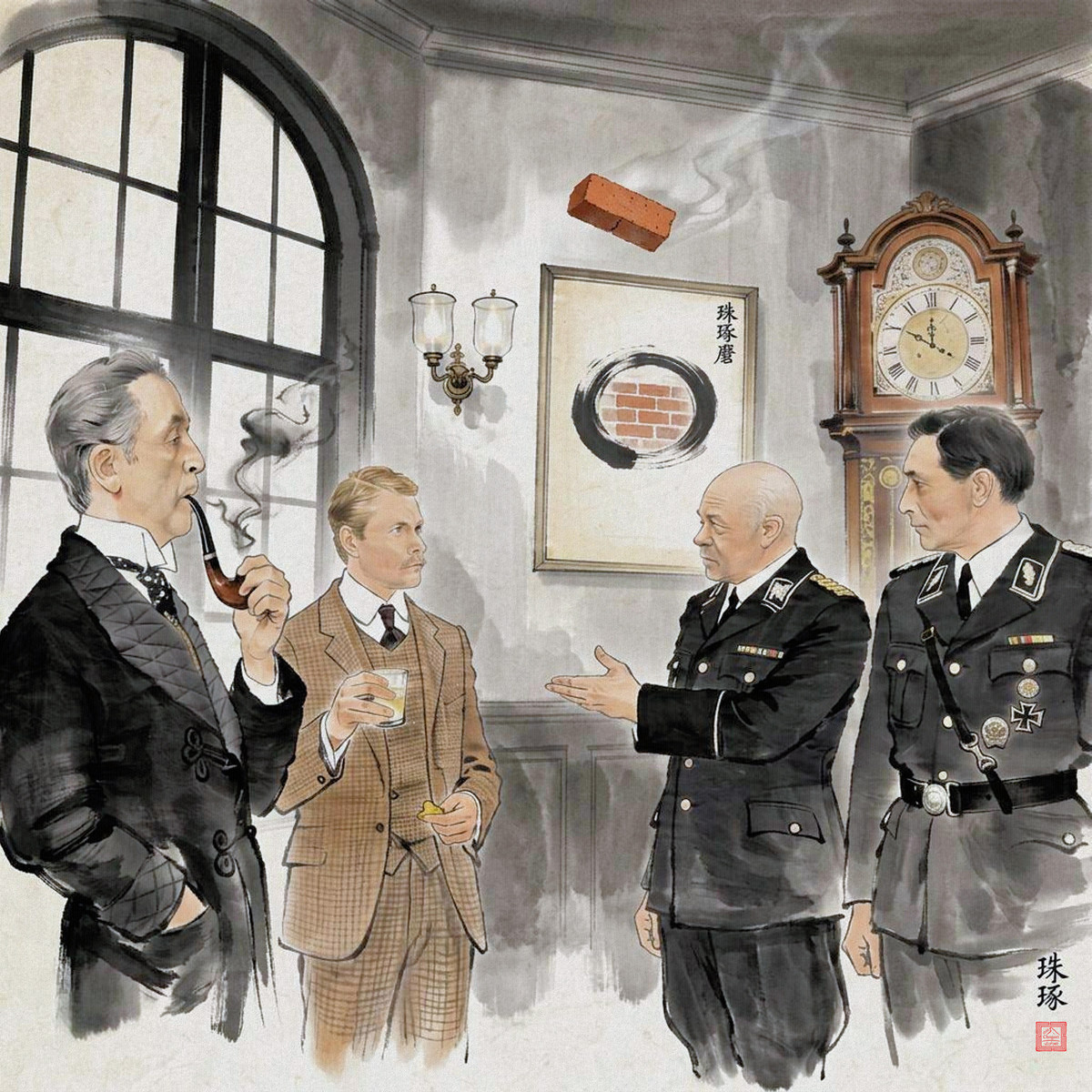
По стене ползет кирпич из деревни Клюево, ну и пусть себе плывет, деревянный как утюг.
— Шерлок, почему у меня звук дребезжащий, а у вас шелестящий?
— Это оттого, Ватсон, что Мюллер сделал тишину в гестапо просто невыносимой.
«Дятел», — подумал Штирлиц.
«Сам ты Мюллер», — подумал дятел.
А за окном шел снег и рота красноармейцев. Кирпич медленно полз по стене в предвкушении точного попадания.
В это время Василий Иванович с Петькой внимательно наблюдали за кирпичом в бинокль.
— Петька, приборы!
— Сорок пять!
— Что сорок пять?
— А что приборы?
Поручик хотел было что-нибудь добавить про Наташу, но проявил чудеса такта и промолчал: ситуация и без того выходила из-под контроля.
Штирлиц тем временем подошел к окну и решительно закрыл форточку. Снег идти перестал. Рота красноармейцев — тоже.
— Элементарно, Ватсон! — глубокомысленно изрек Холмс, стряхивая пепел прямо на ковер Мюллера. — Хорошо еще, что коровы не летают!
И только пастор Шлаг, так и не научившийся ходить на лыжах, продолжал упорно скользить по летнему асфальту в сторону швейцарской границы.
Тем временем из-под ковра Мюллера, брезгливо стряхивая с себя пепел от трубки Холмса, вылез чукча.
— Однако, апельсина! — философски заметил он и на всякий случай купил у Штирлица чугунный радиатор.
Штирлиц насторожился. Он помнил, что чукча в гестапо — верная примета к дождю, а свой барабан он оставил на явочной квартире у радистки Кэт. Так близко к шуньяте советский разведчик не подбирался еще никогда, а до Таллина было уже далеко.
— А может, бахнем? — с надеждой в голосе спросил Петька, доставая из ножен шашку.
— Обязательно бахнем, — успокоил его Василий Иванович, поправляя усы. — Вот только дочитаем инструкцию к этому долбаному кирпичу.
А кирпич, не обращая внимания на всю эту суету, продолжал упорно ползти вверх по стене в надежде на просветление.
— Всё суетишься? — спросило просветление, высунувшись из-за угла.
- Кацу!
И тут кирпичу внезапно и главное абсолютно стало накласть на всё с баальшим прибором: остатки коньяку высосал Петька, а законы гравитации в кабинете Мюллера были отменены личным приказом фюрера еще в прошлый четверг.
The Brick of Śūnyatā
A brick from the village of Klyuevo was crawling up a wall. Well, let it drift if it wants to — wooden as an iron.
“Sherlock, why does my sound rattle while yours rustles?”
“Because, Watson, Müller has made silence in the Gestapo simply unbearable.”
Woodpecker, thought Stirlitz.
Müller yourself, thought the woodpecker.
Outside the window, snow was going, and so was a company of Red Army soldiers. The brick crawled slowly up the wall in anticipation of a direct hit.
Meanwhile, Vasily Ivanovich and Petka were watching the brick through binoculars.
“Petka, instruments!”
“Forty-five!”
“Forty-five what?”
“What do you mean, instruments?”
The lieutenant was about to add something about Natasha, but displayed miracles of tact and held his tongue: the situation was getting out of hand perfectly well without him.
Meanwhile, Stirlitz walked over to the window and resolutely shut the little vent. The snow stopped. The company of Red Army soldiers stopped too.
“Elementary, Watson!” Holmes said profoundly, flicking ash straight onto Müller’s carpet. “Good thing cows don’t fly!”
And only Pastor Schlag, who had never learned to ski, kept stubbornly sliding along the summer asphalt toward the Swiss border.
At that moment, from under Müller’s carpet, brushing Holmes’s pipe ash off himself with fastidious disgust, a Chukchi crawled out.
“Now then. Orange,” he remarked philosophically, and, just in case, bought a cast-iron radiator from Stirlitz.
Stirlitz grew wary. He remembered that a Chukchi in the Gestapo was a sure sign of rain, and he had left his drum behind at the safe house with radio operator Kat. Never before had the Soviet intelligence officer come so close to śūnyatā, and Tallinn was already far away.
“Maybe we blow something up?” Petka asked hopefully, drawing his sabre.
“We’ll definitely blow something up,” Vasily Ivanovich reassured him, adjusting his moustache. “Just as soon as we finish reading the instructions for this damned brick.”
And the brick, paying no attention to all this fuss, kept stubbornly crawling upward along the wall in the hope of enlightenment.
“Still fussing?” enlightenment asked, peeking around the corner.
“Katsu!”
And then the brick suddenly — and, above all, absolutely — stopped giving a damn about anything, with an instrument of considerable size: Petka had sucked down the last of the cognac, and the laws of gravity in Müller’s office had been abolished by the Führer’s personal order as of last Thursday.
The Brick of Śūnyatā
A brick from Klyuevo crawled up a wall. Let it drift — wooden as iron.
“Sherlock, why does my sound rattle while yours rustles?” “Because, Watson, Müller has made silence in the Gestapo unbearable.”
Woodpecker, thought Stirlitz.
Müller yourself, thought the woodpecker.
Outside the window, snow was going, and so was a company of Red Army soldiers. The brick crawled upward toward a direct hit.
Vasily Ivanovich and Petka watched it through binoculars.
“Petka, instruments!”
“Forty-five!”
“Forty-five what?”
“What do you mean, instruments?”
Stirlitz shut the little vent. The snow stopped. The Red Army soldiers stopped too.
A Chukchi crawled out from under Müller’s carpet, brushed off Holmes’s pipe ash, and remarked philosophically, “Now then. Orange.”
“Maybe we blow something up?” Petka asked hopefully.
The brick kept crawling toward enlightenment.
“Still fussing?” asked enlightenment.
“Katsu!”